
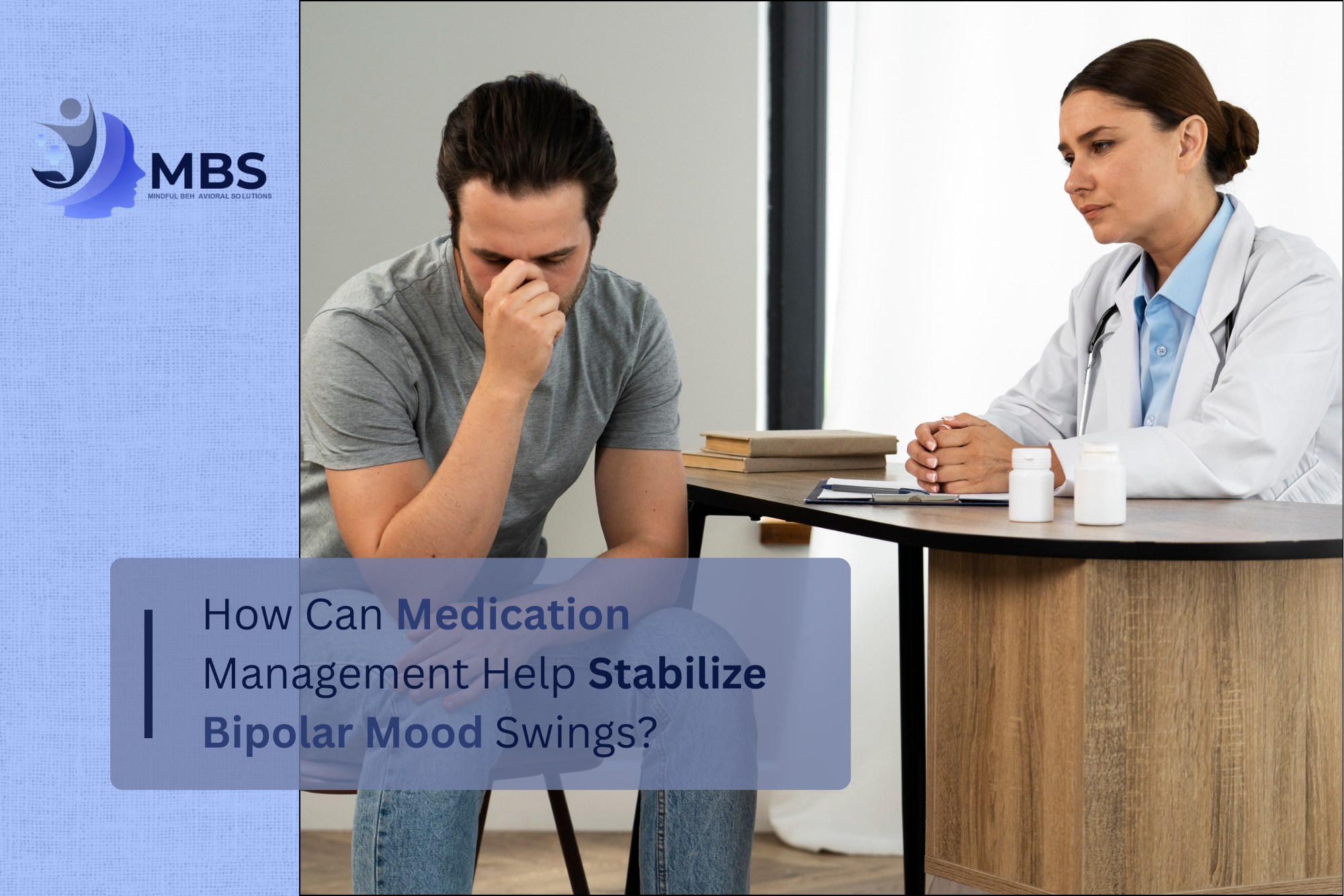
Bipolar disorder causes big mood swings. You may feel very sad for a long time. You may then feel very high or energetic. These changes make life hard for you and for the people who care for you. Good care can help. Medication is often part of that care.
What Is Medication Management?
Medication management involves selecting, administering and monitoring medicines according to a plan. We watch how the medicine works. We watch for side effects. We change doses when needed. We meet with you often. This helps keep your mood steady and your body safe.
How Medicine Helps Stabilize Mood Swings
Some medicines calm highs and lows. Mood stabilizers can lower the chance of big mood shifts. Antipsychotic medicines can help when moods are very high or mixed. Sometimes, small doses of other medicines help with sleep or anxiety. Doctors choose what fits you best.
Why Regular Visits Matter
Medicines do not fix everything at once. We need visits to see how you feel. We check your mood, sleep and energy. We ask about side effects. We may order blood tests. These visits help us keep you safe and find the right dose. When you come to follow-ups, you are more likely to stay well.
Common Medicines in Simple Words
- Lithium
A strong medicine that helps stop big highs. We check the blood and kidneys when you take it. - Anticonvulsants
These are mood stabilizers that also treat seizures. Doctors may use them for mood swings. - Antipsychotics
These medicines can calm very high moods. They can also help with sleep and clear thinking.
Each medicine has good points and side effects. We pick the best one for you.
How We Make the Plan Human and Safe
We listen to you first. We learn about your life, your health and your goals. We explain each choice in simple words. We make a plan with you. The plan says what medicine to take, when to take it and when to check in. If you want telehealth or in-person visits, we can do both. This helps you get care that fits your life.
Mindful Behavioral Solutions offers medication management and mental health evaluation. Faith Ogala, NP, PMHNP-BC, provides care in person and by telehealth. She is licensed in Texas, California, New York, Illinois and Florida. Care is focused on understanding you and helping you feel supported.
What To Expect at First
First, we do a mental health evaluation. We ask about your mood history and any medicines you used before. We talk about your sleep, stress and daily routine. We may order lab tests if needed. Then we start one medicine at a low dose. We ask you to check in often.
If the medicine helps and the side effects are okay, we keep it. If not, we change it. This step-by-step way helps your body adjust and lowers risk.
How Families and Friends Can Help
Family and close friends can learn to notice mood changes. They can help remind you about medicine and visits. They can support healthy sleep and daily habits. If you want, they can join the visits. Support from others makes medication work better.
Things To Watch For
Tell us about new problems right away. Watch for strong tiredness, stomach upset, shaking, or thoughts that feel scary or confusing. If you feel worse or think about hurting yourself, get help right away. We can change your plan quickly if needed. Regular lab tests help us catch problems early.
Why Sticking with The Plan Matters
Stopping medicine all at once can cause mood swings to return. Sometimes they come back stronger. Taking medicine as planned and coming to visits lowers this risk. Over time, the right plan can help you sleep better, focus more and enjoy daily life.
Medication Plus Therapy and Lifestyle
Medicine often works best with therapy and healthy habits. Therapy can teach skills to manage stress and mood changes. Good sleep, regular meals and daily movement help too. Limiting alcohol and drugs also supports mood balance. We look at your whole life, not just symptoms.
How Mindful Behavioral Solutions Helps
Mindful Behavioral Solutions provides medication management and mental health evaluation in a caring setting. Visits are offered in person and through telehealth. Faith Ogala, NP, PMHNP-BC, gives kind and professional care. The goal is to help you feel stable, heard and supported.
Final Words
You are not alone. Medication management is a steady path we walk with you. It can help reduce mood swings and bring more balance to your life. With regular visits, careful checks and support, many people feel better and more in control. Help is available and healing is possible.
FAQs
Q. How does medicine help with bipolar?
Medicine can make mood swings smaller. It helps you feel steadier.
Q. How long until medicine works?
Some medicines help in days. Some take weeks. We watch you and adjust as needed.
No comment