
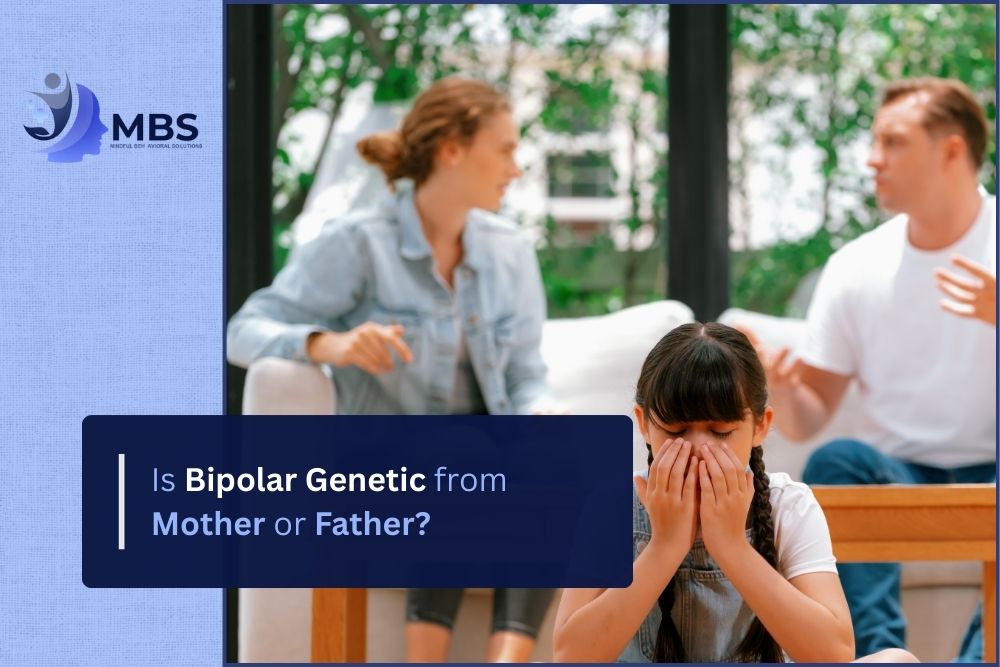
Many people ask this question: Is bipolar genetic from mother or father? Learning about the family history of bipolar disorder can be a way to eliminate fears and blame and provide early support.
At Mindful Behavioral Solutions, we help families understand bipolar disorder and offer personalized care that combines medication with mindfulness for balanced living.
Below, we’ll explain what bipolar disorder is, the role of genetics, family patterns, and how care can help people live well.
What Is Bipolar Disorder?
Bipolar disorder causes extreme mood swings that affect sleep, work, school and relationships.
- Mania: Exhibiting high energy, enthusiasm, or restlessness
- Depression: Feeling low, miserable, or fatigued
Bipolar disorder is not a weakness or poor choice. It is a mental health disorder that should be understood and treated.
Is Bipolar Disorder a Genetic Disease?
Yes. Bipolar disorder can be hereditary. This means genes play a role. Genes are small parts inside the body. They carry instructions from parents to children. Hair color and eye color come from genes. Some health conditions can also come from genes.
Suppose someone in the family has the condition, the hereditary bipolar percentage or risk increases compared to the general population. However, this does not mean it will happen for sure. It only means the risk is higher.
Is Bipolar Genetic from Mother or Father?
Bipolar disorder can run in both sides of the family. It is not just of the mother or just of the father. An individual has an opportunity to inherit risk genes parentally.
There is no single gene that causes bipolar disorder. Many genes work together. If one parent experiences bipolar disorder, the child has a stronger possibility than someone without a familial record.
People often ask: If a parent is bipolar, will the child be? While not guaranteed, the risk is higher if a parent has bipolar disorder. But many children of bipolar parents never develop it.
Genes increase risk, but they do not decide everything.
Does Bipolar Disorder Skip a Generation?
Yes, bipolar disorder may skip a generation. A grandparent might possess it, but the parent might not. Then the child may develop it later in life.
This happens because genes can stay quiet for years. Life events and stress can also influence the onset or exacerbation of symptoms.
Other Causes of Bipolar Disorder
Genetics is only part of the story. Other contributing factors include:
- Stressful life events
- Trauma or loss
- Notable lifestyle modifications (e.g., lack of sleep)
- Variations in brain chemistry
Some people with risk genes never develop symptoms, while others may experience them after stress or illness. Bipolar disorder is often a mix of genes and life experiences.
At Mindful Behavioral Solutions, we treat the whole person, combining evidence-based medicine with mindfulness strategies to address both biological and emotional needs.
When Does Bipolar Disorder Start?
Are you born with bipolar or do you develop it? Bipolar disorder often begins in the teen years or early adulthood, but it can start at any age.
Some may show signs as little ones; others might identify issues later on.
Early warning signs can include:
- Intense mood swings
- Trouble sleeping
- Rapid speech or racing thoughts
- Persistent sadness or hopelessness
Bipolar Disorder and Family: Why Family History Still Matters
Early care and support can be obtained through knowing your family history. Families can:
- Watch for early signs
- Reduce stigma and shame
- Encourage early evaluation and treatment
Open conversations help families understand that bipolar disorder is a health condition, not anyone’s fault.
How Care Can Help
Bipolar disorder can be treated. Many people live full and happy lives with the right care.
Parenting with bipolar disorder can be challenging, but with the right tools, parents can provide a stable and loving environment for their families.
Treatment often includes:
- Medication to balance mood
- Mental health evaluation to understand symptoms
- Ongoing support and follow-up
At Mindful Behavioral Solutions, we create custom care plans where evidence-based practices are combined with mindfulness.
We offer telehealth and face-to-face scheduled appointments where appropriate medical care is affordable and confidential.
Customized care is essential because all people with bipolar disorders experience them in different ways. We are not just trying to control symptoms but ensure better living daily, better relations and permanent wellness.
Living Well with Bipolar Disorder
Bipolar disorder does not indicate that life is at an end. With the proper care, individuals can flourish at school, work and home. They can establish good relationships and live.
Learning about the condition is an effective initial step. Understanding that bipolar disorder can come from either parent helps remove blame. It shows that everyone is wrong.
Final Thoughts
So, is bipolar genetic from mother or father? The answer is both. Genes from either parent can increase risk, but they do not determine the outcome. Life events, stress and early care are equally important.
If bipolar disorder affects your family, you are not alone. Mindful Behavioral Solutions offers care, assessment and individualized care to patients to enable them to flourish.
Make a call and book your mental health assessment.
FAQs
Is bipolar dominant or recessive?
Bipolar disorder involves multiple genes, not just one dominant or recessive gene.
Can you develop bipolar later in life?
Yes, symptoms can appear at any age, triggered by stress or brain changes.
Is there a genetic test for bipolar disorder?
No, there’s no single test. Diagnosis is based on symptoms, family history and environment.
No comment