
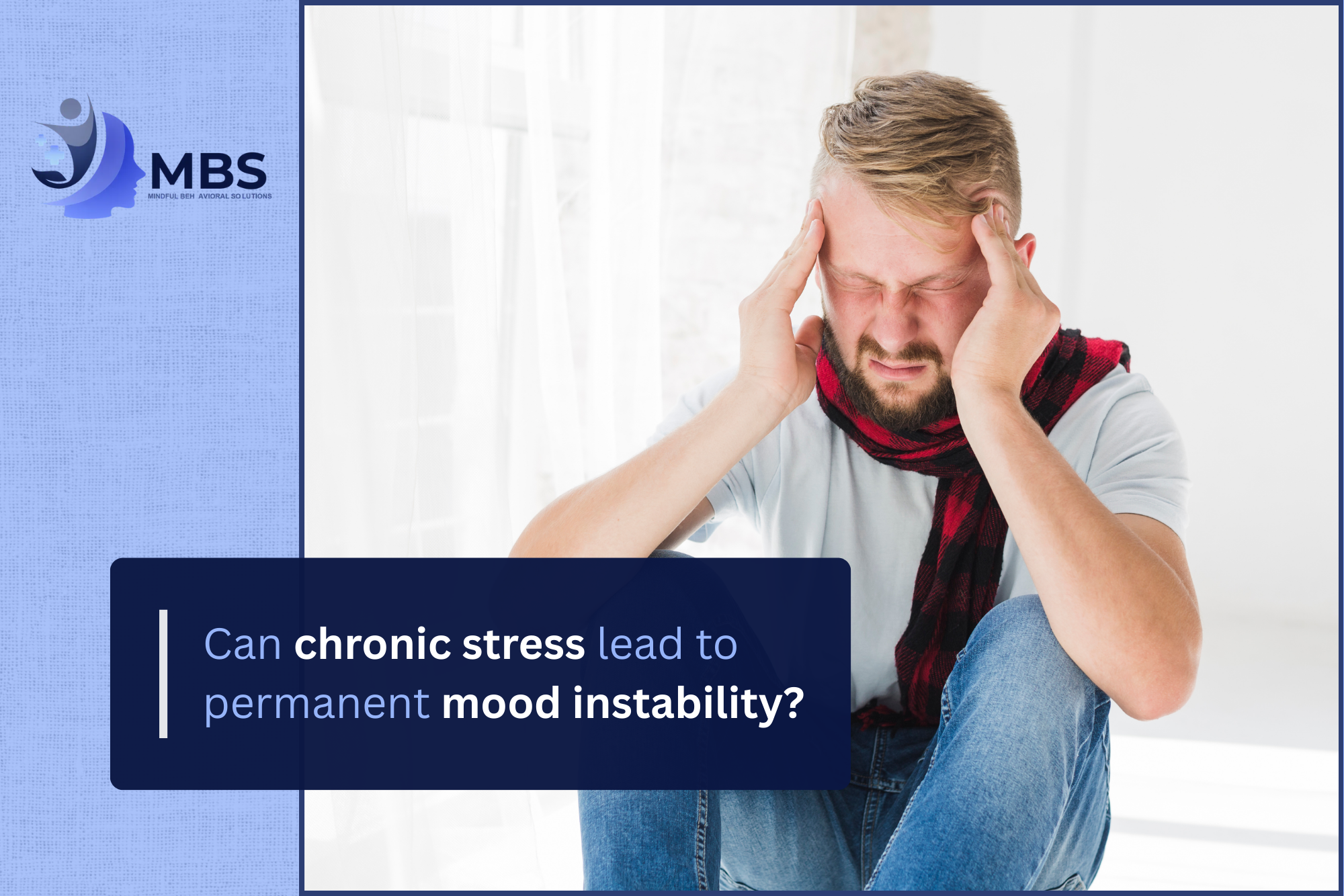
Stress is part of life. A little stress can help us solve problems. But if stress lasts a long time, it can hurt us. You may wonder if long-term stress can cause mood problems that never go away. Here, we will explain this in straightforward terms. We also share steps you can take now and how Mindful Behavioral Solutions can help.
What Is Chronic Stress?
Chronic stress means feeling stressed most days for a long time.
It can come from money worries, work, family problems, or long health issues.
When your body feels stress all the time, it stays on alert. That wears you down. Over time, your body and mind get tired.
How Stress Affects Your Brain and Mood
Stress sends signals in your body. These signals change how your brain works.
When stress lasts, parts of the brain that control mood can change. This can make you feel sad, worried, or angry more often. You might cry more or lose interest in things you used to enjoy. Stress can also make sleep hard. Bad sleep makes the mood worse.
Can Stress Cause Long-Lasting Mood Problems?
Yes, it can. But it is not always permanent.
Long-term stress can change brain circuits. For some people, the changes clear up when stress ends. For others, changes last longer. These longer changes are more likely when stress is very strong, happens for many years, or starts when you are very young.
Even when changes last, many people get better with help. Treatment, steady routines and support can bring real recovery. So “long-lasting” does not always mean “forever.”
Signs That Stress Is Affecting Mood
If you see these signs, stress may be causing bigger problems:
- You feel sad or angry most days.
- Your mood jumps from high to low with no clear reason.
- You sleep too little or too much.
- You do not enjoy things you used to like.
- You feel tired, empty, or worried a lot.
- You have thoughts of hurting yourself.
If you have these signs, please get help. Tell someone you trust. Call your provider or visit urgent care if you feel in danger.
Small Steps You Can Try Today
You do not have to change everything at once. Small steps help.
- Sleep: Try to go to bed and wake up at the same time.
- Move: Walk for ten minutes. It helps the mood.
- Breathe: Take five slow deep breaths when you feel tense.
- Talk: Tell a friend or family member how you feel.
- Routine: Make a small plan for each day.
- Limit screens: Too much news or social media can raise stress.
Do one small thing today. Do another thing tomorrow. Little steps add up.
Therapy and Skills That Work
Talking with a therapist gives you tools. These tools help you manage thoughts and habits that keep stress high. Therapy can teach:
- How to spot stress early.
- How to change worried thoughts.
- Ways to calm your body.
- How to make steady daily routines.
Some people do best with therapy alone. Others need therapy plus medicine. Medicine can help when mood problems are strong. A good plan fits you and your life.
How Mindful Behavioral Solutions Can Help
You do not have to do this alone. At Mindful Behavioral Solutions, we offer care to help you feel steadier.
- Mental health evaluation. We listen and learn how stress affects you. We make a clear plan.
- Therapy. We connect you with therapists who teach real skills.
- Medication management. If medicine can help, our providers watch how you do on it and make safe changes.
- Telehealth and in-person care. We want care to fit your life.
- Same-day appointments are available when we can. If you need help quickly, call us and we will try to see you the same day.
Meet Faith Ogala, NP, PMHNP-BC. Faith is a caring nurse practitioner. She is board certified and licensed in multiple states. Faith listens to you. She helps families and people find steady care that fits their lives.
A mental health evaluation at Mindful Behavioral Solutions is a good first step. We will assist you in determining the most suitable combination of therapy and medication.
When To Get Professional Help Right Now
Get help right away if any of these are true:
- Your mood makes it hard to care for yourself.
- You cannot go to work or school because of your mood.
- You have thoughts about hurting yourself.
- You feel like you might hurt someone else.
Call emergency services or go to the emergency room if you’re in danger. Reach out to a trusted person if you’re experiencing thoughts of self-harm.
Ways To Lower the Risk of Long-Term Mood Problems
You can lower the chance that stress will lead to lasting problems. Try these ideas:
- Build healthy daily habits for sleep, food and activity.
- Learn stress skills from a therapist or class.
- Keep close friends and family who support you.
- Ask for help early when stress grows heavy.
- Avoid alcohol or drugs to cope. They can make the mood worse.
- Keep regular checkups with your healthcare provider.
Early steps often stop problems from getting worse.
What Recovery Can Look Like
Recovery is different for each person. For many people, the mood swings get less over time. You may need a few weeks or many months of therapy and support. Some people need medicine for a while. Others use therapy and habits to stay steady long term.
You may find that you can manage emotions better. You may sleep more, worry less and enjoy life again. Recovery often means learning new skills and using them every day.
Helping a Loved One
If someone you care about is stressed, you can help.
- Listen without judging. Say, “I hear you.”
- Ask how you can help.
- Offer to go with them to an appointment.
- Check in by text or visit. Small acts matter.
- Encourage them to get professional help when the signs are serious.
Your steady support can make a big difference.
Final Thoughts
Chronic stress can lead to mood instability. For some people, the changes last a long time. But many people get better. You can take small steps now to feel better. Therapy, steady routines and support help a lot. If needed, medicine can be part of your plan.
You do not have to carry this alone. If stress is changing your mood, consider a mental health evaluation. Mindful Behavioral Solutions is here to help with therapy and medication care. Faith Ogala and our team listen and work with you to find what helps.
You matter. Your feelings matter. Take one small step today. Call or book an evaluation with us. We will walk with you.
FAQs
Q. Will stress change my brain forever?
Not always. Stress can change the brain, but many people recover with care.
Q. How long before I feel better?
It varies. Some people feel better in weeks. Others need months. Start with one small step today.